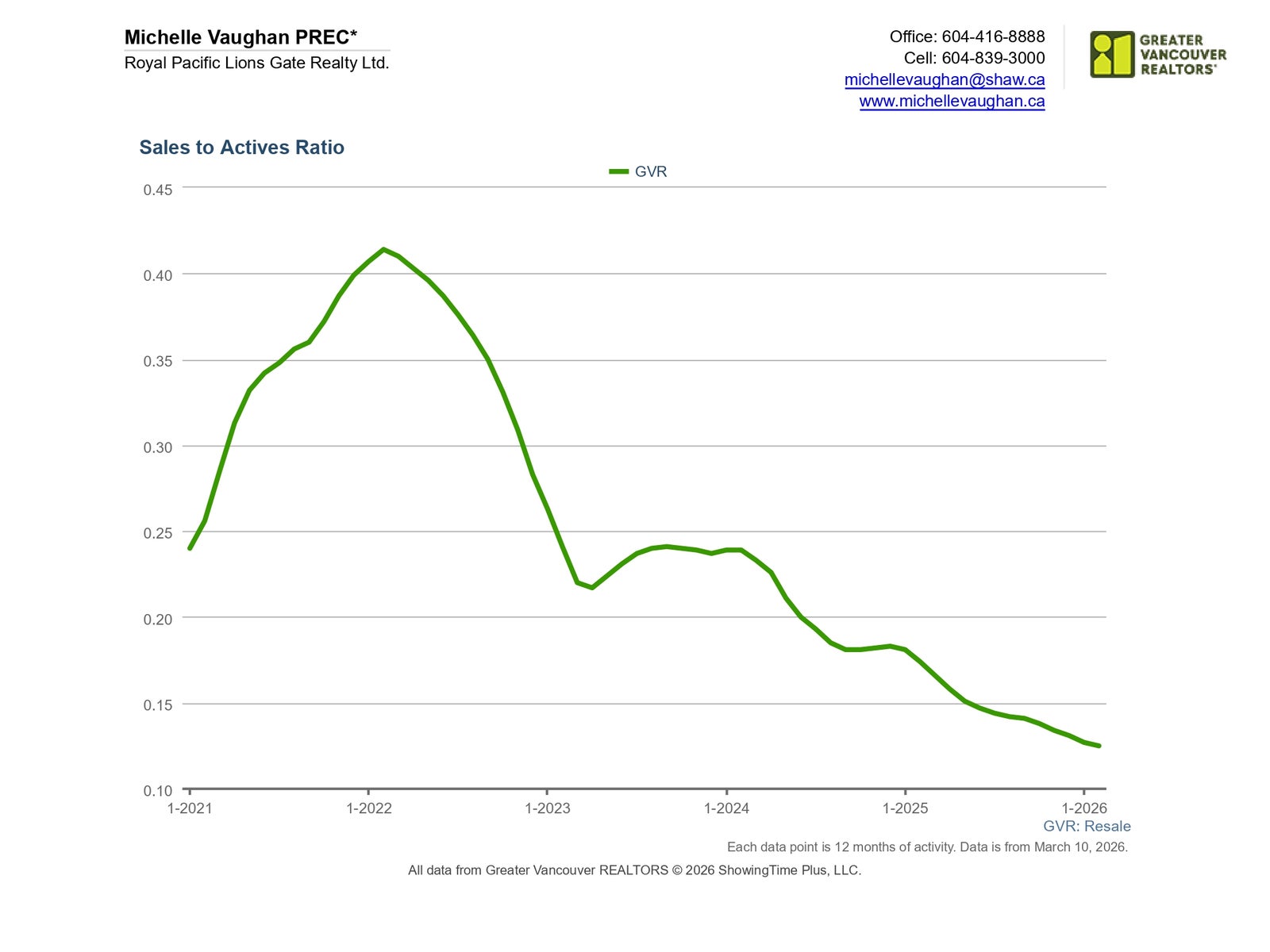
Demand Has Been Falling in the Greater Vancouver Housing Market Since 2022
The Greater Vancouver real estate market is entering a new phase in 2026. After several years defined by rapid price growth, intense competition, and extremely limited inventory, the market is beginning to rebalance. More homes are coming to market, buyers are taking their time, and sellers are gradually adjusting expectations as conditions shift.For both buyers and sellers, understanding what this reset means is key to making informed decisions in today’s market.
WHAT IS DRIVING THE MARKET SHIFT
Across the Greater Vancouver region, inventory levels have increased compared to the unusually tight conditions seen during the pandemic housing surge. While long-term housing supply remains limited, buyers today have more options than they have had in several years.With more properties available, buyers are no longer feeling the same urgency that once drove multiple-offer situations and rapid price escalation. Instead, many are watching the market closely and taking more time before making offers.This shift has naturally slowed the pace of transactions across many areas of the region.
BUYERS ARE WATCHING AND WAITING
One of the most noticeable changes in the 2026 market is buyer behaviour. Buyers remain active in the sense that they are touring homes and monitoring new listings, but many are waiting to see how the market develops before committing.Uncertainty around interest rates and affordability continues to influence decision-making. As a result, homes are generally taking longer to sell and buyers are negotiating more carefully.This has created a market where activity exists, but transactions are happening more slowly than during the peak pandemic years.
SELLERS ARE ADJUSTING TO A DIFFERENT MARKET
At the same time, sellers across Greater Vancouver are beginning to encounter a more competitive landscape. With more listings available, buyers can compare properties more carefully and are less likely to feel pressure to act immediately.One trend becoming increasingly common is the relisting of properties that did not initially sell. In many cases these homes return to the market at slightly lower prices, although the reductions are often modest as sellers adjust to evolving conditions.In today’s environment, pricing strategy is critical. Homes that enter the market competitively priced continue to attract attention, while those priced too aggressively may remain available longer or require later adjustments.
WHAT THE DATA IS SHOWING
One useful way to understand the current market balance is through the sales-to-active listings ratio, which measures the relationship between supply and demand.Historically, ratios above 20 percent indicate strong seller’s market conditions, while ratios below 12 percent suggest a buyer’s market. In recent years the Greater Vancouver ratio has been hovering closer to the balanced market range, reflecting rising inventory and more cautious buyer behaviour.This shift helps explain why many buyers are taking a “wait and see” approach while sellers continue to test price expectations.
GREATER VANCOUVER REMAINS A DESIRABLE MARKET
While the market is clearly evolving, Greater Vancouver remains one of the most desirable real estate regions in Canada. The combination of lifestyle, employment opportunities, natural beauty, and limited land supply continues to support long-term housing demand.What we are seeing in 2026 is not a dramatic collapse, but rather a recalibration. Buyers and sellers are adjusting to new conditions and the market is moving into a more balanced phase.For anyone considering buying or selling property in Greater Vancouver, understanding these dynamics is essential. Every neighbourhood and property type behaves differently, and local insight can make a significant difference when navigating today’s market.
This analysis has also been released as a press release summarizing the current shift in the Greater Vancouver housing market. You can read it here.
If you would like to discuss how these market trends may affect your property or real estate plans, feel free to reach out. Understanding the market is the first step toward making confident decisions.